
30mm vs 50mm Lens: Which Focal Length Should You Choose?
A 30mm lens gives you a natural, everyday field of view, while 50mm frames tighter with more background blur and compression. The catch: on an APS-C camera these two behave very differently than on full-frame.
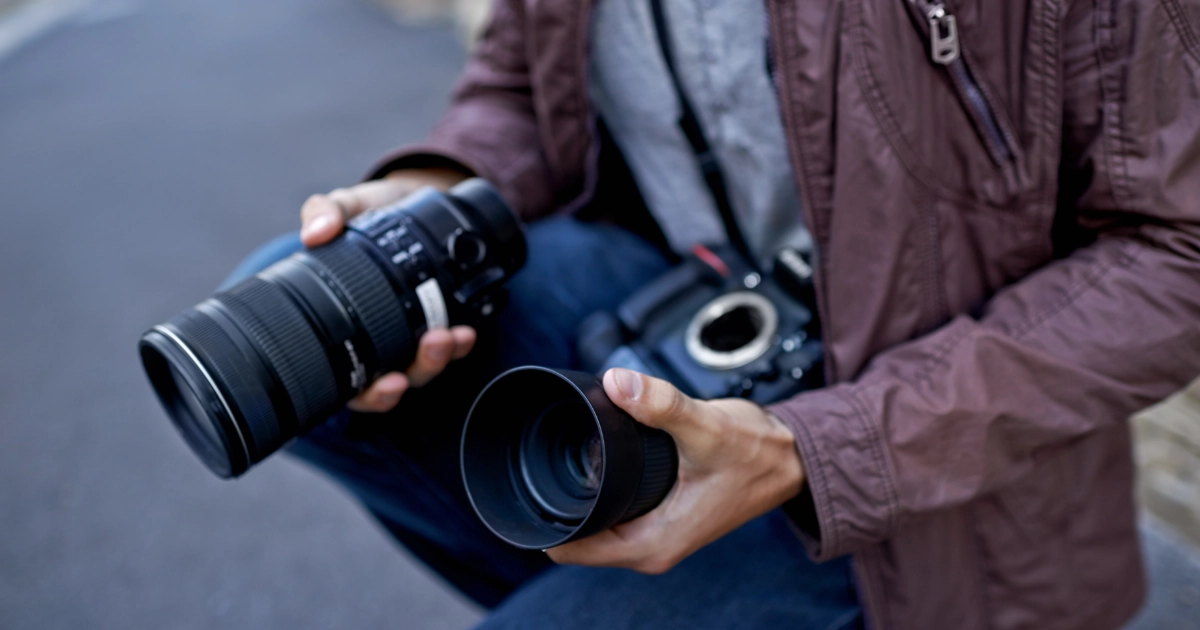
Choose 30mm for a natural, everyday field of view that works in tight spaces, and 50mm when you want tighter framing, stronger background blur, and flattering subject compression. But before you pick, one detail decides everything: what sensor is your camera? On APS-C, a 30mm behaves like a "normal" lens and a 50mm becomes a short portrait lens — the same two numbers give completely different results depending on the body they're mounted on.
The single most important factor: your sensor
Focal length alone doesn't tell you how wide a shot will be — the sensor size does too. Cameras with smaller APS-C sensors "crop" the image, making every lens act longer than its printed focal length (see crop factor explained for the full breakdown):
| Lens | Full-frame | APS-C (1.5×) | Micro Four Thirds (2×) |
|---|---|---|---|
| 30mm | Wide-normal | ~45mm equivalent (normal) | 60mm equivalent |
| 50mm | Normal ("standard") | ~75mm equivalent (short portrait) | 100mm equivalent |
This is why the popular 30mm f/1.4 primes are almost always APS-C lenses — on an APS-C body a 30mm gives the classic "normal" ~45mm-equivalent view that looks close to how your eye sees a scene. Meanwhile a 50mm on that same APS-C body reaches into short-telephoto portrait territory.
If you're not sure which sensor you have, filter by your exact mount first — for example Sony E APS-C lenses or full-frame Sony FE lenses — so you're comparing lenses that actually behave the way you expect.
Field of view and perspective
The core difference is simple: 30mm is wider, 50mm is tighter. A 30mm captures more of the scene, so you get context — the room, the street, the environment around your subject. A 50mm crops in, isolating the subject and cutting out clutter.
There's a subtler effect too. To fill the frame with the same subject, a 50mm lens makes you stand farther back, and that extra working distance gently compresses features and separates the subject from the background. This is why 50mm (and longer) tends to be more flattering for faces, while very wide lenses can distort features if you step in close.
Background blur
At the same aperture, the longer 50mm produces noticeably more background blur than a 30mm, because longer focal lengths magnify and soften the background more. Pair a 50mm f/1.8 with a bit of distance behind your subject and you get that creamy, subject-pops-off-the-background look with far less effort than a 30mm requires. If you're chasing blur, focal length matters as much as aperture — see our companion guide on f/2.8 vs f/3.5.
When to choose 30mm
- Everyday and walk-around shooting — its natural field of view (on APS-C) looks the way scenes feel.
- Tight interiors and indoors — you can capture a room or a group without backing into a wall.
- Street and documentary — enough context to tell a story, without being so wide that faces distort.
- Environmental portraits — the subject and their surroundings.
- Vlogging and handheld video — a wider view is more forgiving of shake and easier at arm's length.
When to choose 50mm
- Portraits and headshots — flattering compression and easy subject separation.
- Tighter, cleaner framing — cut out distractions and fill the frame with your subject.
- Food, products, and details — the slight compression and blur look professional.
- Low light — 50mm f/1.8 primes are among the cheapest fast lenses available, so-called "nifty fifties."
So which one?
If you can only own one and you shoot a bit of everything indoors and out, the 30mm's more versatile field of view (on APS-C) usually wins as a first prime. If your priority is people, portraits, and that blurred-background look, go 50mm. Many photographers eventually own both — a wider normal for everyday and a 50mm for portraits — because they complement rather than overlap.
The quickest way to feel the difference is to put two specific lenses side by side and compare their field of view, weight, and price together:
- Browse and filter every prime by mount and focal length in the lens finder.
- Line two candidates up in the side-by-side lens comparison tool.
Summary
| Question | 30mm | 50mm |
|---|---|---|
| Field of view | Wider, more context | Tighter, isolates subject |
| Best for | Everyday, street, interiors, video | Portraits, details, low light |
| Background blur | Less | More |
| Works in tight spaces | Yes | Harder — needs room |
| Flatters faces | Only from a distance | Yes |
Bottom line: 30mm is the more flexible everyday lens, 50mm is the portrait and low-light specialist — but confirm your sensor first, because crop factor changes what each one actually does. Compare specific 30mm and 50mm lenses for your camera to weigh field of view against price and weight.