It's a trade-off
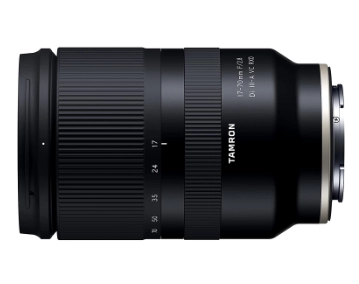
The Tamron 17-70mm f/2.8 Di III-A VC RXD offers a lower price (£95 less), a more flexible focal range (17-70mm vs 18-50mm) and built-in stabilization, while the Sigma 18-50mm DC DN 2.8 offers a lighter body (235g less) and closer minimum focusing. Both share a compatible lens mount.
Our take: If you're unsure, the Tamron 17-70mm f/2.8 Di III-A VC RXD is the safer value pick — step up to the Sigma 18-50mm DC DN 2.8 only if you want a lighter body (235g less) and closer minimum focusing.
It really comes down to price versus weight — pick the one whose strengths match how you shoot.
…if you want:
| Tamron 17-70mm f/2.8 Di III-A VC RXD | Sigma 18-50mm DC DN 2.8 |
|---|---|
| Price £380on Amazon | Price £475on Amazon |
| Tamron |
 Lenny's Answer
A versatile standard zoom lens designed for APS-C Sony E-mount cameras, featuring a wide 17-70mm focal range and a constant f/2.8 aperture. It incorporates Vibration Compensation (VC) technology to enhance stability for handheld shooting and videography.
Pros
Cons
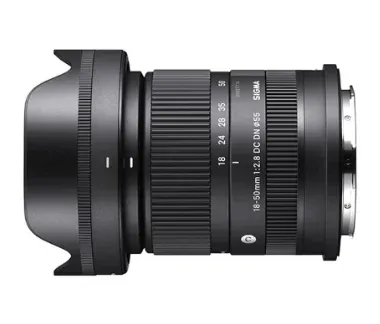
An ultra-compact and lightweight standard zoom lens with a constant f/2.8 aperture, offering an 18-50mm focal range. It is built for a variety of mirrorless systems including Sony E, Fujifilm X, and Nikon Z mounts.
Pros
Cons
Summary
The Tamron 17-70mm offers a more versatile zoom range and internal stabilization, making it ideal for video, whereas the Sigma 18-50mm is significantly more compact and lightweight. Both lenses share a bright f/2.8 constant aperture, but the Tamron provides a narrower angle of view at the long end for more reach.
Verdict
Choose the Tamron 17-70mm f/2.8 Di III-A VC RXD if you need stabilization and a versatile range for video; select the Sigma 18-50mm DC DN for the most portable f/2.8 setup available for travel.
Lenny's verdictBETAA versatile standard zoom lens designed for APS-C Sony E-mount cameras, featuring a wide 17-70mm focal range and a constant f/2.8 aperture. It incorporates Vibration Compensation (VC) technology to enhance stability for handheld shooting and videography.
Pros
Cons
An ultra-compact and lightweight standard zoom lens with a constant f/2.8 aperture, offering an 18-50mm focal range. It is built for a variety of mirrorless systems including Sony E, Fujifilm X, and Nikon Z mounts.
Pros
Cons
Summary
The Tamron 17-70mm offers a more versatile zoom range and internal stabilization, making it ideal for video, whereas the Sigma 18-50mm is significantly more compact and lightweight. Both lenses share a bright f/2.8 constant aperture, but the Tamron provides a narrower angle of view at the long end for more reach.
Verdict
Choose the Tamron 17-70mm f/2.8 Di III-A VC RXD if you need stabilization and a versatile range for video; select the Sigma 18-50mm DC DN for the most portable f/2.8 setup available for travel.
…if you want:
| BrandSigma |
Sensor Format
| Sensor Format
|
Mount
| Mount
|
| CategoryUltra Wide | CategoryUltra Wide |
| Use Case EverydayTravelEventLow LightVideography | Use Case EverydayLandscapeLow LightStreetTravel |
| Focal Length17mm - 70mm | Focal Length18mm - 50mm |
| Angle of View79° - 23° | Angle of View74° - 35° |
| Aperture f/2.8 (max)f/22 (min) | Aperture f/2.8 (max)f/22 (min) |
| Blades9 Smoother bokeh | Blades7 |
| Circular ApertureYes | Circular ApertureYes |
| Min Focus Distance0.19m | Min Focus Distance0.12m Focuses closer |
| Max Magnification0.27x | Max Magnification0.2x |
| Filter Diameter67mm | Filter Diameter55mm |
| Weight525g | Weight290g Lighter |
| StabilizationYes Has stabilization | StabilizationNo (relies on camera) |
| Auto FocusYes | Auto FocusYes |
| Release Date2020 | Release Date2021 |
| View full detailsTamron 17-70mm f/2.8 Di III-A VC RXD | View full detailsSigma 18-50mm DC DN 2.8 |